
Understanding the Concept of Sustainability
Sustainability—it’s one of those words we hear often, yet it can feel abstract until we see it in action. At its heart, sustainability is about balance. It’s about meeting our needs without compromising the ability of future generations to meet theirs. Sounds fair, right? But when you dig into it, you realize it’s more than just reducing waste or using eco-friendly bags. It’s a lifestyle, a mindset, a promise to live consciously.
When we talk about sustainability projects, we’re referring to efforts—big or small—that aim to protect the planet, nurture communities, and build resilient systems. Whether it’s a community garden, a school recycling program, or a company switching to solar power, each of these projects plays a role in the bigger picture.
What makes sustainability such a powerful concept is how personal it can become. For one person, it might be growing vegetables on their balcony. For another, it might be designing an entire building that runs on clean energy. It doesn’t always look perfect, and that’s okay. Progress over perfection—that’s the mantra.
Another important thing to remember is that sustainability isn’t just about the environment. It includes social and economic wellbeing too. A truly sustainable project looks at how it impacts people, how it supports local economies, and how it fits into the natural world without disrupting it.
So, before diving into specific project types and ideas, it helps to ground ourselves in this bigger picture. Understanding sustainability in all its layers gives each project we take on deeper meaning and a clearer direction. It’s not just about going green—it’s about creating a world that lasts.
Environmental, Social, and Economic Dimensions
When we hear the word “sustainability,” our minds usually jump straight to the environment. Trees, oceans, climate change—that kind of thing. And yes, that’s a big piece of the puzzle. But there’s more. True sustainability is like a three-legged stool. If one leg is weak, the whole thing wobbles.
Let’s break it down. First, the environmental side is about preserving nature. This includes reducing pollution, conserving water, protecting wildlife, and switching to renewable energy sources. Simple efforts—like using less plastic or planting a tree—feed into this dimension. But so do large-scale actions like reforestation projects or urban green planning.
Next is the social aspect, which people often forget. It focuses on equity, access, and wellbeing. Are people treated fairly? Do communities have access to clean air, water, education, and jobs? A sustainability project isn’t truly sustainable if it helps the planet but ignores the people living on it. For example, an eco-friendly factory still isn’t ideal if it underpays its workers or displaces a local village.
Then there’s the economic dimension. This doesn’t mean “making a profit at any cost.” It means finding solutions that are financially viable and inclusive. Can the project sustain itself long term? Does it create fair jobs? Is it affordable for others to replicate? Economic sustainability ensures that good practices can keep going—not just as a short burst of passion, but as a way of life.
What’s beautiful about these three pillars is how they’re all connected. A water-saving initiative might reduce bills (economic), improve community health (social), and conserve resources (environmental). When a project touches all three areas, that’s when it becomes truly powerful.
And sure, it’s not always perfect. But striving for balance? That’s where the magic starts.
The Role of Sustainability in Global Development Goals
Sustainability isn’t just a local effort—it’s actually a global mission. If you’ve ever heard of the United Nations’ Sustainable Development Goals (SDGs), you already know that the world is trying to get on the same page. These 17 goals serve as a blueprint for building a better, fairer, more sustainable future by 2030. Lofty? Yes. But necessary.
Sustainability projects, whether they happen in small neighborhoods or at the international level, often align with these goals. Clean water and sanitation? That’s SDG 6. Affordable and clean energy? That’s SDG 7. Responsible consumption, climate action, sustainable cities—these are all part of the picture.
What makes these goals special is that they connect the dots between different global challenges. Poverty, inequality, climate change, and environmental degradation—none of these can be tackled in isolation. They’re all tangled up together. And sustainability projects, when designed thoughtfully, can help untangle them. For example, a women-led farming co-op might address SDG 1 (no poverty), SDG 5 (gender equality), and SDG 13 (climate action) all at once.
Here’s something a bit humbling: even small-scale projects matter in the big picture. A classroom composting program might not seem like a big deal, but it teaches the next generation about waste, soil health, and food systems—lessons that ripple outwards over time. And that’s the spirit of the SDGs: no action is too small, no voice irrelevant.
Of course, progress isn’t always linear. Some regions struggle more than others. But acknowledging those disparities is part of the process. The more we understand the role of sustainability in these global goals, the more connected our local efforts start to feel. We realize—we’re not just doing it for ourselves, we’re doing it for everyone.
Why Small Projects Can Have Big Impacts
You’ve probably heard the phrase “Think globally, act locally.” It’s not just a catchy quote—it’s a powerful reminder that small actions matter. When we talk about sustainability projects, people sometimes imagine massive operations with big budgets and fancy tech. But here’s the truth: the real magic often starts with something simple.
Let’s take an example. A group of neighbors starts composting in their backyards. It might look tiny, even insignificant from the outside. But over time, that effort reduces landfill waste, enriches soil, lowers greenhouse gas emissions, and inspires others to join. One compost bin turns into five. Five bins spark a school compost initiative. That’s how movements begin—quietly, slowly, locally.
Small projects also feel more doable. They don’t require government funding or expert knowledge—just a little motivation and creativity. Maybe it’s replacing plastic bottles with reusable ones. Or organizing a weekly clean-up drive. Or building a rainwater harvesting system at home. When people see something that works on a small scale, they start to believe in the possibility of change.
And let’s not forget the emotional impact. Small sustainability projects build community. They spark conversations. They give people a sense of ownership and pride. You’re no longer just a bystander to environmental issues—you’re part of the solution, even if it’s in a small way.
It’s also okay if it’s messy at first. Mistakes happen. You might forget your cloth bag or mess up your compost pile. That’s normal. What matters is showing up again the next day. Over time, these small efforts add up—not just in data and numbers, but in the quiet shift of culture and mindset.
So never underestimate the ripple effect of a small project. The world doesn’t change all at once—it changes because someone somewhere decided to start.
Types of Sustainability Projects
Sustainability isn’t a one-size-fits-all journey—it looks different depending on where you are, who you are, and what matters to you. That’s what makes it exciting. Whether you’re living in a city apartment, running a school, managing a company, or part of a local community, there’s a sustainability project that fits your world.
Let’s start at the grassroots level. Community-based projects are often the heart of sustainable change. These might include shared gardens, water conservation efforts, local recycling initiatives, or tree planting drives. They’re often fueled by collaboration, creativity, and a love for the place people call home. What’s powerful here is the shared responsibility and connection people feel—they’re not just improving the environment, they’re building stronger communities.
Then there are educational projects in schools and colleges. These are especially impactful because they shape the minds of the next generation. From eco clubs to solar-powered classrooms, these initiatives blend learning with action. Students not only learn theory—they see sustainability in practice, and often lead the change themselves.
In the corporate world, sustainability is becoming more than a buzzword. Companies are shifting toward green operations, ethical sourcing, and carbon footprint reduction. Some are going paperless, while others are rethinking packaging or investing in employee wellness. These workplace projects can make a massive difference because of their scale—and when done right, they also inspire trust and loyalty from customers and staff alike.
And then we have the quiet warriors: home-based or DIY sustainability projects. These might not make headlines, but they shape habits. Compost bins, balcony gardens, solar lamps, minimal-waste shopping—these are the everyday choices that create lasting change.
Each type of project plays its part. No level is more important than the other. It’s not about how big the project is—it’s about how intentional it is.
Community-Based Projects
There’s something really special about watching a neighborhood come together for a common goal. Community-based sustainability projects are exactly that—people uniting to care for their shared space and the future they’ll all experience together. These kinds of projects don’t just focus on reducing environmental harm; they also strengthen human connections, which is sometimes the piece we don’t realize we’ve been missing.
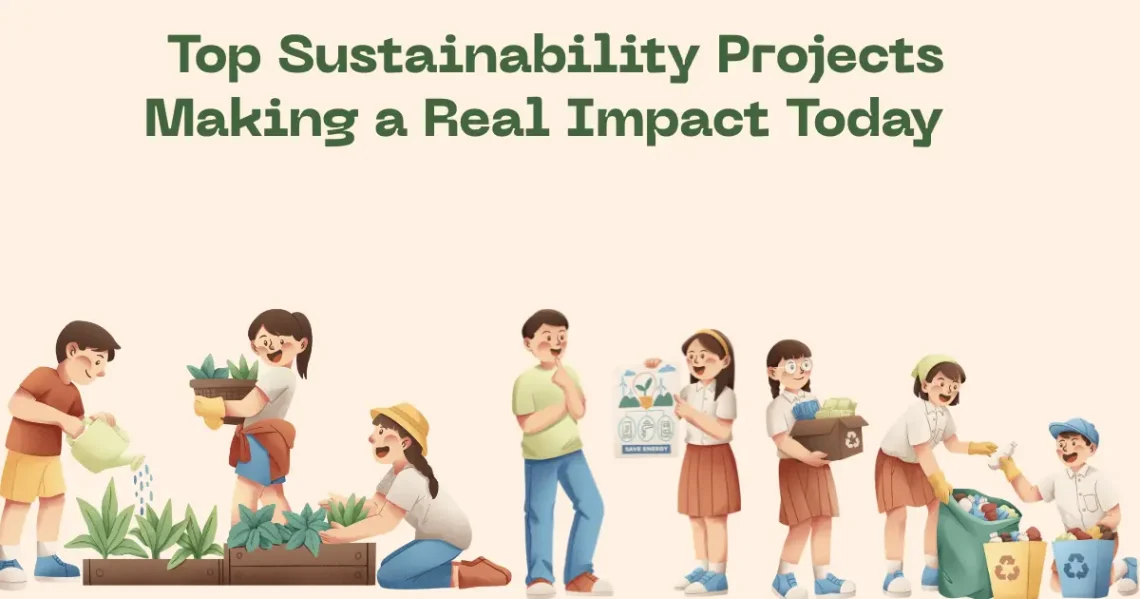
Let’s paint a picture. Imagine a group of neighbors setting up a community garden. It starts with a few plots, some volunteers, maybe a local sponsor. Slowly, people of all ages get involved. Kids learn how food grows, elders share wisdom about native plants, and everyone starts eating a little healthier. It becomes more than a garden—it’s a living classroom, a gathering place, and a point of pride.
Or think of a neighborhood clean-up drive. What might seem like a simple activity often sparks conversations, friendships, and awareness. People notice the litter they once ignored. They start asking deeper questions: Why is this happening? Can we prevent it?
Another beautiful example is tool-sharing libraries. Instead of everyone owning the same rake or drill, neighbors borrow and lend. It cuts down on overconsumption and waste, and it teaches people how to trust and support each other again. These small shifts make a bigger difference than we often give them credit for.
Of course, not all community projects go smoothly. There might be disagreements, low turnout, or limited resources. But the resilience built through problem-solving as a group is part of the process. These projects teach patience and collective responsibility.
In the end, community-based sustainability efforts are a reminder that we don’t have to face the world’s problems alone. In fact, the solutions get better when we tackle them—together.
School and College Sustainability Initiatives
There’s something quietly powerful about the way schools and colleges approach sustainability. It’s not just about installing solar panels or organizing Earth Day events—it’s about embedding values that can last a lifetime. When young minds are introduced to the principles of sustainable living early on, they don’t just adapt; they lead.
Let’s start with the basics. Many educational institutions kick off their sustainability journey through simple actions—like placing recycling bins in classrooms, reducing plastic use in cafeterias, or encouraging students to bring their own water bottles. These might seem like small details, but they normalize conscious habits early on. Over time, these little actions shape a mindset.
Then there are more hands-on initiatives, like school gardens, composting programs, or science projects focused on renewable energy. When students plant a seed and watch it grow, or build a model wind turbine for a class presentation, they begin to understand sustainability not as a theory—but as something real and within their control.
Some schools even take it a step further by incorporating sustainability into the curriculum—through environmental science, ethical economics, or community engagement projects. Students are encouraged to research, question, and come up with their own solutions. That sense of agency? It’s a game-changer.
What’s beautiful about these projects is how they ripple outward. Kids bring ideas home. They challenge their families to use less water or start a compost bin. They become advocates—sometimes without even trying to be.
Sure, not every school has the budget or resources for big programs. But creativity often thrives in constraint. And even when things aren’t perfect—like a failed garden or a messy waste audit—students learn through the experience.
In the end, educational sustainability initiatives are more than projects. They’re seeds planted in curious minds—seeds that grow into thoughtful, capable, change-making adults.
Corporate and Workplace Sustainability Projects
Sustainability in the workplace isn’t just a trendy checkbox anymore—it’s becoming a business essential. From tiny startups to global corporations, more and more companies are realizing that being environmentally and socially responsible isn’t just nice—it’s smart. It builds trust, reduces waste, and creates a sense of purpose within teams that spreadsheets just can’t capture.
So what do these sustainability projects actually look like in the workplace? They vary—sometimes in surprisingly creative ways. A company might begin by ditching disposable plastics in the cafeteria or setting up an internal recycling system. Some offices encourage a “green commute” culture, where employees bike, carpool, or take public transit to reduce emissions. Others go even bigger—like redesigning their buildings for energy efficiency or switching their entire operations to renewable energy sources.
Then there’s the supply chain. Conscious businesses are taking a hard look at where their materials come from, who’s making their products, and how ethical those systems really are. It’s not always easy—it requires transparency and accountability—but it builds long-term credibility and customer loyalty.
Even internal culture is shifting. Companies now host sustainability workshops, form employee-led “green teams,” or support volunteer programs focused on community clean-ups, conservation, or education. These initiatives don’t just improve the planet—they give employees a voice and a deeper connection to their work.
Of course, not every workplace gets it right. Some projects are superficial—a.k.a. greenwashing. Others start strong but fizzle out without long-term support. But the fact that these conversations are happening at all is a huge step forward.
At the end of the day, corporate sustainability isn’t just about cost savings or public image. It’s about taking responsibility. It’s about shaping a work culture where people—and the planet—can thrive together.
Home-Based or DIY Sustainability Projects
When we think of sustainability, we often picture big changes—solar panels, electric cars, zero-waste homes. But the real magic often starts in the quiet corners of our everyday lives. Your kitchen, your bathroom, your garden, even your laundry room—all of these spaces are opportunities to live more sustainably. And the best part? You don’t need a big budget or a fancy setup. You just need intention.
Take something as simple as composting food scraps. It’s a bit messy at first—banana peels, coffee grounds, eggshells in a bucket? Not exactly glamorous. But over time, you watch those scraps turn into rich, beautiful soil. That transformation feels oddly satisfying. And it keeps so much waste out of landfills.
Or think about switching to reusable products—cloth shopping bags, beeswax wraps, glass containers. Sure, you’ll forget them sometimes (we all do). But once it becomes a habit, it feels like second nature. Suddenly, you’re buying less, throwing away less, and thinking twice before making purchases.
For those with a bit of outdoor space—or even just a windowsill—growing herbs or vegetables is a game-changer. It’s not just about food. It’s about the joy of nurturing something, understanding the seasons, and building a deeper connection to what we eat.
And don’t overlook the power of DIY creativity. Homemade cleaning supplies, upcycled furniture, second-hand decor—all of it counts. These projects often turn into something personal and meaningful. They’re not just practical—they reflect values.
Yes, it can be overwhelming at first. You might wonder if your little compost bin or water-saving showerhead is making a difference. But it is. These choices add up. And maybe, just maybe, they’ll inspire your neighbors, friends, or family to start their own journey too.
Inspiring Real-World Examples
Sometimes the best way to understand what’s possible is by seeing what’s already being done. Real-world sustainability projects don’t just inspire—they help us imagine new ways of living, working, and thinking. And they come in all shapes and sizes, from the rooftops of urban skyscrapers to the smallest rural villages.
One great thing about sustainability is that it invites innovation from anyone, anywhere. You don’t have to be a scientist or a policymaker—you can be a student, a parent, a farmer, or a store owner. The heart of it lies in noticing a problem and caring enough to do something about it.
Take urban gardening, for example. All over the world, cities like New York, Nairobi, and Karachi are turning abandoned lots and rooftops into green spaces that grow food, cool the air, and bring communities together. It’s not just about aesthetics—it’s about reclaiming space and making it work for people, not just around them.
Or look at how renewable energy projects are reshaping rural areas. In some remote villages with no access to the power grid, community-run solar programs are lighting up homes, powering schools, and even helping small businesses thrive. These aren’t high-tech, expensive systems—they’re thoughtful, practical, and life-changing.
Then there are waste reduction efforts in places like Japan and Sweden, where entire towns have committed to zero waste. That means recycling, reusing, and redesigning how things are consumed. It’s not perfect—but it’s forward-thinking and deeply intentional.
What makes these examples truly powerful is the human element behind them—the persistence, the experimentation, the trial and error. These stories remind us that change is possible. Not overnight, and not without effort. But when people come together with vision and care, incredible things happen.
Urban Gardening and Green Spaces
Picture a rooftop garden in the middle of a crowded city. Or maybe a vertical wall of herbs growing on the side of a tall building. It sounds almost dreamy, right? But this is real—and it’s happening in cities all over the world. Urban gardening and green spaces are becoming more than just pretty backdrops. They’re survival strategies. Healing spaces. Acts of resistance and hope.
In cities where concrete dominates and space is scarce, green areas offer a much-needed breath of fresh air—literally. They reduce urban heat, absorb carbon dioxide, and filter pollutants. But beyond their environmental benefits, these gardens reconnect people to nature in deeply personal ways. That patch of basil on someone’s balcony? That might be the only greenery they interact with all week.
One of the most beautiful things about urban gardening is its accessibility. You don’t need a big backyard or fancy tools. People are growing food in old buckets, on windowsills, and in tiny alleyways. In places like Detroit, vacant lots have been transformed into vibrant community gardens where neighbors grow, share, and learn together. In Tokyo, rooftop farms are popping up on office buildings and hotels.
And then there’s the emotional side of it. Gardening has a calming, grounding effect. It teaches patience. It encourages mindfulness. For kids growing up in apartments, getting their hands dirty in soil—even just once a week—can be life-changing.
Of course, it’s not always easy. There are zoning restrictions, maintenance challenges, and sometimes limited water access. But the momentum is there. With creativity, community, and a little sunlight, even the grayest city corners can bloom.
So if you’ve ever thought, “What difference could a few plants make?”—the answer is: more than you think.
Renewable Energy Projects (Solar, Wind, etc.)
When we think of sustainability, renewable energy is often the first thing that comes to mind—and for good reason. Energy is the engine that powers everything: our homes, our schools, our phones, our industries. But when that energy comes from fossil fuels, it also powers pollution, climate change, and environmental degradation. That’s where renewable energy projects come in—and they’re changing the game, quietly and steadily.
Solar and wind are two of the most familiar sources, but they’re not the only ones. There’s hydroelectric power from flowing rivers, geothermal energy from deep beneath the earth, and even innovative solutions like algae-based biofuels. But what makes these projects so inspiring is their adaptability—they can be massive and industrial, or small and personal.
For instance, in sunny regions across Africa and South Asia, solar panel installations on rural homes are bringing light to villages that have never had electricity. Kids can study at night. Shops can stay open longer. People can charge their phones and connect with the world. These aren’t just energy solutions—they’re lifelines.
Then there are community wind farms in parts of Europe and the U.S., where small towns collectively invest in wind turbines. The profit? It’s shared among locals. That means clean energy, economic growth, and energy independence—all in one.
In urban settings, more people are installing solar panels on rooftops or switching to solar-powered water heaters. It’s not always cheap up front, but the long-term savings and environmental benefits are clear. Plus, newer technology is making these systems more accessible every year.
Sure, there are challenges—like storage issues, upfront costs, or policy barriers. But the shift is happening. And every time someone flips a light switch powered by the sun or wind, it’s a small but powerful statement: the future is already here.
Waste Management and Recycling Programs
Let’s be honest—waste is a messy topic. Literally and emotionally. It’s easy to toss something in the bin and not think about where it goes. Out of sight, out of mind. But sustainability starts to get real when we stop ignoring the pile and start asking: What happens to all this stuff? That’s where waste management and recycling programs come in.
At their core, these projects are about rethinking our relationship with waste—how we create it, how we dispose of it, and how we can do both more responsibly. And they don’t always require high-tech systems or fancy bins. In fact, many of the most effective programs start with education and community effort.
In some towns, zero-waste initiatives are being adopted with incredible commitment. Kamikatsu, Japan, for example, has over 40 categories of waste sorting. Sounds intense, right? But it’s also deeply intentional. Residents actively participate, and over time, waste has become less of a burden and more of a shared responsibility.
Closer to home, school recycling clubs, community swap events, and plastic-free challenges are gaining traction. These initiatives help people realize that reducing waste isn’t just about recycling—it’s about refusing, reusing, repairing, and only then, recycling. It’s about choosing products with less packaging, mending clothes instead of tossing them, and donating items that still have life in them.
Even businesses are joining in. Cafés offering discounts for bringing reusable cups, grocery stores selling unpackaged items, and offices going paperless—all of these are forms of mindful waste management.
Yes, things don’t always go smoothly. Contaminated recycling bins, limited infrastructure, or lack of awareness can slow progress. But each small effort chips away at the larger problem.
And once you start noticing how much we throw away? You can’t unsee it. That’s when the change truly begins.
Conclusion
Sustainability isn’t some distant goal reserved for experts or governments—it’s something each of us can step into, wherever we are. Whether you’re planting herbs on your balcony, organizing a school eco-club, or helping your workplace go paperless, your contribution matters. The world doesn’t change with one grand gesture—it shifts slowly, through consistent, imperfect, hopeful actions taken by everyday people.
The beauty of sustainability projects lies in their diversity. Some are quiet and personal. Others are loud and collective. But all of them ripple outward. A compost bin in your kitchen might seem small—but it teaches, it inspires, it saves. A community garden might just be a patch of green—but it feeds both bellies and hearts.
Of course, the path isn’t perfect. Mistakes happen. Progress stalls. Motivation fades. But that’s okay. What matters most is intention. The desire to live gently, think critically, and act with care. That’s where it all begins.
So maybe the real question isn’t “What can I do?”—it’s “What small thing can I begin with today?” From there, who knows what might grow.
FAQs
Q1: What is a sustainability project?
A sustainability project is any initiative—big or small—that aims to protect the environment, support communities, or create long-lasting, positive change. It can be personal (like composting), community-based (like a clean-up drive), or institutional (like installing solar panels in schools or offices).
Q2: Can I start a sustainability project at home?
Absolutely! You can start with simple actions like reducing plastic use, composting food scraps, growing plants, or conserving water. Every small step counts.
Q3: What’s the easiest sustainability project for beginners?
Try setting up a basic recycling system, switching to reusable bags and bottles, or starting a mini herb garden. These are low-cost and easy to maintain.
Q4: Do sustainability projects actually make a difference?
Yes, they do—especially when multiplied across communities. Small efforts, when repeated and shared, create habits, shift mindsets, and influence larger systems over time.
Q5: How can schools and colleges get involved?
They can form student-led eco-clubs, run awareness campaigns, install waste-sorting bins, or even incorporate environmental topics into their curriculum. Involving students makes the change more lasting and impactful.
Q6: Are there funding options for sustainability projects?
Yes. Some local governments, NGOs, and environmental organizations offer grants, training, or resources to support sustainable initiatives. Crowdfunding and community partnerships are also great options.