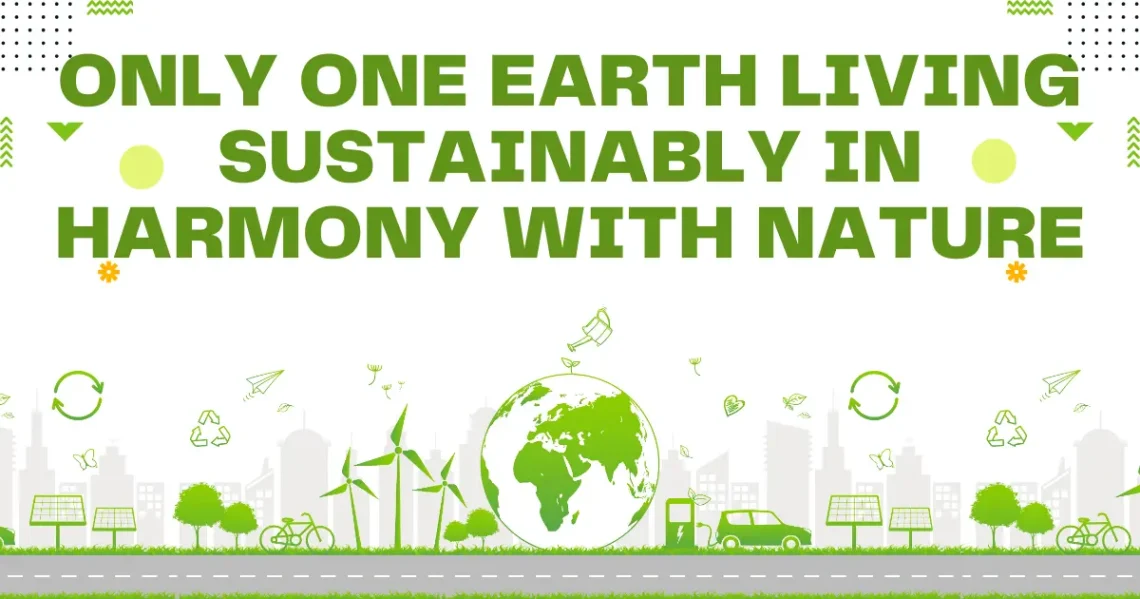

Understanding the Meaning Behind “Only One Earth Understanding the Meaning Behind “Only One Earth Living Sustainably in Harmony with Nature”
“Only One Earth Living Sustainably in Harmony with Nature” isn’t just a catchy slogan—it’s a quiet reminder, a plea, and sometimes even a wake-up call. The phrase first gained global recognition during the 1972 United Nations Conference on the Human Environment. Even then, the world had begun to sense that human impact on our planet was growing dangerously out of balance. Now, more than fifty years later, the message feels more urgent than ever.
At its core, this statement speaks a simple truth: we have no second chance, no spare planet, no alternate reality waiting to rescue us. Every choice we make—whether it’s how we travel, what we consume, or how we treat natural spaces—directly shapes this one precious Earth. And when we talk about living sustainably in harmony with nature, we’re not just referring to pristine forests or coral reefs—we’re talking about our own lives, our health, our communities, and our future.
Modern life often lures us into forgetting how deeply connected everything is. Fast fashion, plastic convenience, and food shipped from across the globe have created a sense of normalcy that simply isn’t sustainable. That’s why “Only One Earth Living Sustainably in Harmony with Nature” isn’t just a slogan—it’s a compass. It gently redirects us from convenience toward consciousness, from short-term gain to long-term balance.
The real beauty of this phrase is in its quiet hope. It nudges us to notice, to care, and to choose better. Because once we understand that this is the only Earth we have, we begin to live differently. More gently. More wisely. And that shift—however small—holds the power to transform not just our lives, but the planet’s future too
The Origin and Essence of the Phrase
The phrase “Only One Earth” was born during a moment in history when the world stood at a crossroads. It first came into the spotlight during the 1972 United Nations Conference on the Human Environment in Stockholm. This was the first time countries across the globe gathered specifically to talk about how human development was affecting the planet. And this phrase—so simple, yet so powerful—was chosen as the slogan for that conference. It was more than just a banner; it was a message to humanity.
What’s remarkable is how the essence of the phrase has stayed timeless. Back then, concerns were already rising about pollution, loss of biodiversity, and unsustainable growth. Yet here we are, decades later, still grappling with many of the same issues—only now with added urgency. That enduring truth—that we still only have this one planet—makes the phrase feel both grounding and haunting.
But beyond its political or environmental context, the phrase holds something deeply human. It speaks to something almost emotional: a recognition that the Earth is finite, fragile, and irreplaceable. Not in a cold, scientific way, but in a way that hits close to home. When you hear “Only One Earth,” you don’t think of graphs or carbon stats—you think of forests, oceans, the smell of rain, your childhood backyard, the air your children will breathe.
Its power lies in its simplicity. No jargon, no debate—just truth. It invites you to pause, reflect, and consider what kind of relationship you want to have with the world around you. Not as a ruler, but as a part of something greater. It reminds us that Earth isn’t a resource to be used—it’s a companion to live with, respectfully.
Why This Idea Still Matters More Than Ever Today
There’s something quietly urgent about the phrase “Only One Earth”—and maybe that’s why it still matters, maybe even more than it did back in 1972. We live in a time where the consequences of ignoring sustainability are no longer distant or theoretical. We can feel them now. Whether it’s scorching heatwaves, rising sea levels, or polluted air, the planet is trying to tell us something. Loudly.
This idea—this reminder that we only have one Earth—isn’t just sentimental. It’s deeply practical. Our entire lives depend on the stability and health of this planet. Our food, our water, our homes, even our sense of well-being are connected to how well we care for the natural world. And yet, it’s easy to get distracted by convenience, by short-term profits, by the rush of modern life. That’s why we need this phrase more than ever. It gently brings us back to the truth.
In today’s world, we’re seeing ecosystems collapse, species vanish, and communities suffer from the impacts of climate change. But we’re also seeing people—especially young people—rise up with fierce hope and urgency. The idea of “Only One Earth” reminds us that our actions matter. That each decision, no matter how small, contributes to a bigger picture.
And maybe here’s the heart of it: this phrase still matters because it unites us. We may live in different countries, speak different languages, and hold different beliefs—but we all share this one planet. There’s no alternate version. No plan B.
So yes, it matters—because it’s a truth that calls us to responsibility, but also to compassion, cooperation, and care.
How to Live Sustainably in Harmony with Nature
Living sustainably in harmony with nature doesn’t mean abandoning modern life or living in a tent in the woods. It simply means being mindfully connected to the impact of our choices—and choosing differently when we can. At its heart, it’s about alignment. Instead of working against nature, we begin to work with it.
Start small. The easiest way to embrace sustainability is to slow down and notice your daily habits. How much do you throw away? What kind of products do you support with your money? How much energy are you using—are you wasting any? These questions aren’t meant to guilt you, but to gently guide you back into a rhythm with the planet. When you start seeing waste, pollution, and excess not just as environmental issues, but as breaks in your relationship with Earth—it hits differently.
Living in harmony with nature also means respecting limits. The Earth has a certain pace. A season for growth, a time for rest. But as humans, we often push for “more” all the time—more production, more profit, more speed. Nature doesn’t work that way. And when we try to force it, something breaks—soil becomes barren, oceans overheat, forests disappear.
But here’s the hope: sustainability isn’t about perfection. It’s about realignment. Walking, not rushing. Choosing reusable over disposable. Supporting local instead of mass-produced. Eating food that’s grown with care. Listening to the wind, watching the trees, being grateful. These small things—they add up. They teach us how to live in a way that nourishes both the Earth and our own souls.
Daily Habits That Make a Big Difference
When we think of saving the planet, it’s easy to imagine huge, dramatic actions—mass protests, solar farms, electric cars. But the truth is, sustainability starts in the quiet corners of our everyday lives. And the beauty of it? Tiny habits can have a surprisingly big ripple effect.
Take, for example, your morning routine. Do you let the water run while brushing your teeth? That’s a small change right there—turning off the tap saves gallons over time. What about your coffee or tea? Choosing a reusable mug instead of a disposable cup might seem trivial, but it adds up—especially when millions of people do the same. Even something as simple as turning off lights when you leave a room is an act of respect for energy.
Now think about what you throw away. Plastic packaging, old clothes, leftovers. Could any of that have been reused, composted, or donated? Getting into the habit of sorting waste, carrying a reusable bag, or refusing single-use items starts to change not only your footprint, but your mindset. And that’s the real shift—once you see how much you’re consuming, it’s hard to go back to “normal.”
One powerful habit is asking questions before you buy something: Do I really need this? Who made it? Was it made ethically? Will it last? This isn’t about shame—it’s about learning to pause. To reflect. To care.
And perhaps the most underrated habit of all? Talking about it. Sharing your journey, your slip-ups, your successes. Sustainability isn’t about being perfect—it’s about being present and inviting others along.
Choosing Nature-Friendly Products and Brands
Choosing nature-friendly products isn’t just about buying things labeled “eco”—it’s about becoming a more conscious consumer. Every time you spend money, you’re casting a vote for the kind of world you want. And while that might sound a little intense, it’s also incredibly empowering. Because suddenly, your toothpaste, shoes, or shampoo aren’t just products—they’re part of a bigger story.
So how do you know what’s truly “nature-friendly”? The truth is, greenwashing (when brands pretend to be eco-conscious) is real. That’s why learning to read beyond the label matters. Look for certifications like Fair Trade, USDA Organic, or Forest Stewardship Council (FSC). These aren’t perfect, but they help. Check the ingredients—if you can’t pronounce half of them or they sound like chemicals used in oil drilling, maybe it’s worth digging deeper.
Another good rule of thumb: choose products that last. A $10 T-shirt might seem like a deal until it falls apart after two washes. Investing in well-made, ethical items—even if they cost more upfront—can save you money (and the planet) in the long run. Buy less, but better.
Support local when you can. Local farmers, artisans, and small businesses often use fewer resources for shipping and packaging. Plus, they tend to put heart and soul into their products, not just profits.
And don’t forget the hidden eco-superstars: secondhand goods, thrift finds, and DIY alternatives. They might not come in shiny packaging, but they’ve got stories, soul, and way less waste.
At the end of the day, it’s not about never buying anything. It’s about buying with care. With curiosity. With intention.
Reducing Waste and Embracing a Circular Mindset
Waste—it’s one of those things we all contribute to, often without thinking. But when you pause and consider that almost everything we use has a “before” and an “after,” it opens up a whole new perspective. Where did this item come from? And where will it go once I’m done with it?
That’s where the circular mindset comes in. Unlike the traditional “take-make-dispose” model, a circular approach asks: Can this be reused, repaired, or repurposed instead of tossed? It’s about extending the life of things, reducing our dependence on constant newness, and reshaping our idea of value.
Reducing waste doesn’t mean living in a minimalist white box with only three items to your name. It can start small. Carrying your own water bottle or coffee cup. Saying no to plastic cutlery. Fixing a button instead of buying a new shirt. Composting your food scraps if you can. These aren’t glamorous acts—but they are meaningful.
You can also shift how you view “stuff.” Before tossing something, ask: Is it broken, or am I just bored with it? Our throwaway culture thrives on boredom. But what if we learned to love what we already have? Maybe that old table just needs sanding. Maybe that glass jar could be a planter. The more we reuse, the more creative we become—and the less we burden the earth.
And here’s the heart of it: reducing waste isn’t about perfection. It’s about awareness. Every time you make a choice that favors reuse over disposal, you’re saying, “I care about tomorrow.”
The Role of Community and Collective Action
There’s something quietly powerful about not doing it alone. When it comes to sustainability, individual choices matter—but they ripple much further when supported by a community. A single reusable bag is a start. A neighborhood that organizes plastic-free drives or composting stations? That’s a movement.
Collective action is what turns small gestures into real, lasting change. One person biking to work is inspiring. A group advocating for better bike lanes in their city? That’s policy. It’s this shift from personal effort to shared purpose that builds the momentum our planet so deeply needs.
Communities come in all forms—schools, local farmers’ markets, neighborhood WhatsApp groups, even digital circles. These are spaces where people exchange not just tips and resources, but hope. It’s easier to keep going when you know others are walking beside you, facing the same imperfect journey.
Starting community initiatives doesn’t require grand gestures. It might be as simple as a weekend cleanup, a clothes swap, or a petition for greener public spaces. People are more willing to help than we often assume—they just need someone to take the first step. Maybe that someone is you.
And let’s not forget that different voices add depth. A diverse community brings creative, culturally grounded solutions that one person alone might never think of. When we collaborate—across generations, cultures, and skills—we create richer, more resilient answers to the sustainability puzzle.
So, while the journey toward harmony with nature begins within, it flourishes together. The planet doesn’t need a few perfect people—it needs millions trying, learning, and growing. Together.
Sustaining Hope: Why Every Action Counts
It’s easy to feel overwhelmed. The planet is warming, forests are shrinking, species are vanishing—and we’re just one person trying to recycle correctly or remember our cloth bag. In the face of such enormous challenges, our actions can feel like drops in an endless ocean.
But here’s something that’s deeply, profoundly true: every drop matters.
Hope is not blind optimism. It’s not pretending everything’s okay when it isn’t. Hope is choosing to act because things aren’t okay. It’s picking up the plastic bottle someone else left behind. It’s planting herbs on your balcony. It’s teaching your child to respect bugs and trees. These small actions? They are resistance. They are belief. They are care made visible.
When we choose to live in a way that honors the Earth, we’re not just helping the planet—we’re healing ourselves. We slow down. We notice. We connect. The food we eat becomes more meaningful when we know where it came from. The clothes we wear carry more worth when we’ve mended them by hand. And when we give something back—even something small—we feel less alone, more alive.
Change doesn’t come from one heroic act. It grows quietly, steadily, like roots beneath the soil. It grows every time someone decides to walk instead of drive, to support a local grower, to question a system that profits off destruction.
So yes—every action counts. Yours included. Especially yours.
The Power of Nature Connection: Relearning Our Place on Earth
So often, we rush through our lives without really seeing the world around us. But nature has always been there—steady, wise, and waiting. When we pause to notice the rustle of leaves or the scent of wet soil after rain, something inside us softens. We remember we’re not separate from nature. We are nature. And that realization? It’s a turning point.
Reconnecting with nature doesn’t require grand adventures. It can be as simple as growing herbs on your windowsill or watching birds in your neighborhood. The more we observe, listen, and touch the natural world, the more we feel responsible for it. That’s when sustainability becomes personal—not just something we “should” do, but something we want to do.
By spending time in nature, we also relearn humility. Trees don’t rush, rivers don’t apologize, and ecosystems don’t waste. They flow, they balance, they thrive together. And they teach us to do the same.
Redefining Success Through Sustainable Living
In a world obsessed with more—more stuff, more speed, more status—sustainability invites us to redefine what it means to live well. What if success wasn’t about accumulation, but about alignment? Not about owning the most, but about living with the least harm?
Sustainable living offers us a new kind of richness. It asks: Are you nourished by what you own? Are you proud of the impact you leave behind? These questions aren’t easy—but they’re meaningful. And in answering them, we begin to shape a life that feels more grounded, more honest.
Imagine success measured not by profit, but by peace. Not by likes, but by legacy. That’s the kind of shift that sustainable living offers—and it starts with one brave choice at a time.
Conclusion
Living sustainably isn’t about perfection—it’s about presence. It’s about waking up to the truth that we only have one Earth, and that our daily choices ripple out into the future. Sustainability is more than reusable bags and energy-efficient lightbulbs—it’s a way of seeing the world with care, with curiosity, and with commitment.
Yes, the road can feel uncertain. But it’s also full of possibility. Every meal we choose mindfully, every product we repair instead of toss, every moment we spend in nature reconnects us with something ancient and sacred. A rhythm that says: we are part of this planet—not separate from it.
No one can do everything. But everyone can do something. And when we each take a step toward harmony—however small—we begin to shape a future that’s not only livable, but lovable.
This Earth is home. Let’s treat it that way.
FAQs
Q1: What does “Only One Earth” really mean?
A: It’s a reminder that our planet is unique and irreplaceable. We don’t get a second chance or a backup Earth. Living with this awareness encourages us to make thoughtful, sustainable choices that protect the environment for generations to come.
Q2: How can I start living more sustainably in everyday life?
A: Begin with small, doable shifts—reduce plastic use, save energy, buy less but better, and support local businesses. Even choosing to walk more often or compost your food scraps makes a difference. Start where you are, with what you have.
Q3: Is individual action enough to make a difference?
A: Yes and no. Individual actions matter, but collective efforts amplify the impact. When individuals inspire communities and pressure systems to change, that’s when real transformation happens. Your actions can spark bigger change.
Q4: How can communities contribute to sustainable living?
A: Communities can pool resources, support local initiatives, organize educational events, and advocate for greener policies. When people come together, they can create lasting habits and systems that are kinder to the planet.
Q5: Can sustainable living be affordable?
A: Absolutely. While some eco-products are pricey, sustainable living often means consuming less, reusing more, and focusing on quality over quantity—all of which can save money over time. Many sustainable habits—like cooking at home or using public transport—are both eco-friendly and budget-friendly.