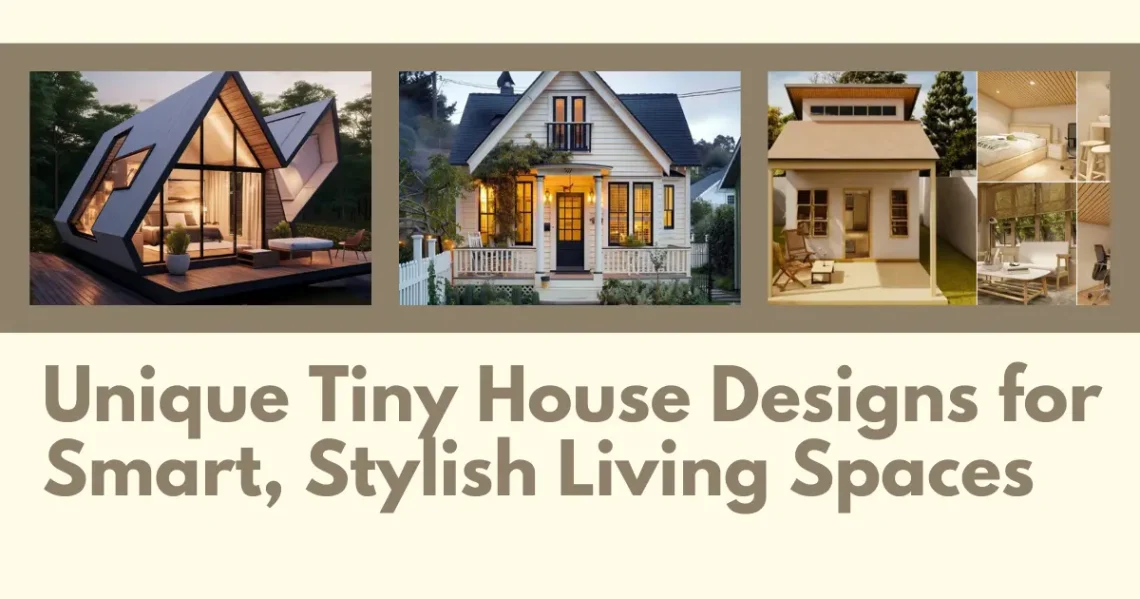

Embracing Creativity in Unique Tiny House Designs
Unique tiny house designs aren’t just about looking different—they’re about living differently. When you choose to live small, you’re not just shrinking your space; you’re expanding your imagination. And that’s where creativity thrives. You start asking bold questions like, “What if my couch turned into a bed and a storage trunk?” or “Could a ladder double as a bookshelf?” In a tiny house, the answer is usually, “Yes—but let’s make it even cooler.”
The beauty of unique tiny house designs is that they give you permission to play. No rigid rules, no wasted space. You can mix textures, add color, experiment with layout—even create a rotating wall that flips from TV to mirror (yes, that exists). It’s your space, so why not make it yours in the truest sense?
And honestly, that personal touch? It makes all the difference. It’s what turns a box into a home. Every weird corner becomes a design opportunity. You stop seeing limitations and start seeing potential. That slanted ceiling? Perfect for a hammock nook. That awkward wall? A vertical herb garden. It’s quirky, sure. But it’s also incredibly you.
Of course, not everything goes to plan. Maybe the multipurpose furniture isn’t as comfy as you hoped, or the fold-down desk wobbles when you write. But those little hiccups—they’re part of the charm. They remind you this home is handcrafted, lived-in, and loved.
So if you’re dreaming of a space that’s truly different, something that reflects who you are, unique tiny house designs are the perfect canvas. It’s not about following Pinterest trends. It’s about breaking them.
Tiny spaces. Big imagination.
Why Tiny Houses Are Perfect for Unique Design
Tiny houses have this special way of forcing you to think outside the box—because, well, you’re literally living inside a very small one. But that’s what makes them perfect for unique design. When every inch matters, you can’t afford to waste space on something uninspired or generic. That’s when creativity steps in. You start questioning the obvious and embracing the unexpected.
Take the kitchen, for example. In a regular-sized home, it’s often the same layout over and over. But in a tiny house? You might see a sink built into a fold-out window shelf, or a spice rack hidden behind a magnetic wall panel. It’s not just fun—it’s functional. Form follows need, and need sparks invention.
And let’s be real—tiny homes attract the kind of people who want to do things differently. Artists, adventurers, dreamers. They’re not just downsizing to save money or live minimally. They’re looking for something more soulful. More intentional. More themselves. So the design naturally becomes a reflection of that. One tiny home might feel like a rustic cabin, while another feels like a futuristic spaceship or a boho art studio.
Tiny houses also give you the freedom to experiment. Since the space is smaller, renovations cost less and take less time. Want to add a skylight? Paint the walls purple? Try out a Murphy bed? Go for it. Mistakes aren’t as big of a deal when they’re made on a smaller scale—and sometimes those “mistakes” lead to the best design ideas.
Ultimately, tiny homes make unique design feel possible, not intimidating. They celebrate the imperfect, the handmade, and the deeply personal. In a world of copy-paste floor plans, a tiny house gives you the rare chance to build something that feels truly one of a kind.
How Limitations Inspire Innovation
It sounds strange at first—how could having less lead to more ideas? But that’s the quiet genius of tiny living. Limitations aren’t roadblocks; they’re starting points for some of the most creative, unique tiny house designs you’ll ever come across. When you’re working with 200 square feet instead of 2,000, you stop thinking in terms of excess and start thinking in layers, solutions, and surprises.
You realize fast: every decision matters. That blank wall? It better hold storage, art, lighting—or ideally, all three. That corner under the stairs? It’s not “wasted” anymore—it becomes a pet bed, bookshelf, or secret pantry. These restrictions challenge the way we typically think about space, nudging us to get playful and, frankly, a little brave.
And innovation doesn’t just stop at layout. Materials come into the spotlight, too. Maybe you’ve got budget constraints or access to only local supplies. Suddenly, you’re learning how to transform reclaimed wood into kitchen countertops, or turning vintage doors into fold-out tables. It’s not about copying what others are doing—it’s about using what you have to create something completely fresh.
Funny thing is, the more problems you face, the more innovative your solutions become. You don’t just want a loft; you want a convertible loft that feels cozy but still airy. You don’t just want storage—you want drawers in the stairs, baskets in the ceiling, maybe even a floor that opens up like a trapdoor. You start to enjoy the puzzle.
Honestly, there’s something freeing about having limitations. They take away the overwhelming possibilities and focus your energy. They guide you. And in that structure, your creativity doesn’t shrink—it shines.
In tiny homes, constraints aren’t curses—they’re invitations. To think deeper. To design smarter. To build something no one else has.
Nature-Inspired Tiny House Designs
There’s something timeless and grounding about nature—it draws us in, calms our nerves, and reminds us of the simple beauty in the world. So it’s no surprise that many unique tiny house designs take deep inspiration from the outdoors. Whether nestled in a forest, perched on a cliff, or floating by the lake, these tiny homes blur the line between inside and out, making nature not just a backdrop, but part of the home itself.
What makes nature-inspired tiny houses so special isn’t just the view—it’s how the design connects with the environment. You’ll find large glass walls that open completely to let the wind in, rooftops covered in grass or moss, wood finishes that are rough, raw, and unpolished on purpose. It’s cozy, yet wild. Peaceful, yet alive.
Many of these designs use sustainable materials and natural elements that age beautifully over time. Reclaimed wood, stone, bamboo—even clay. There’s an authenticity in the textures and colors that feels deeply human. It’s not about perfect finishes—it’s about real ones. You start to feel the rhythms of the earth in the creaks of the floor or the way the light shifts through the trees.
But there’s another layer to it too: emotional connection. Living closer to nature changes how you move, how you rest, how you breathe. You become more attuned to seasons, sounds, even silence. It invites a kind of slowness that modern life doesn’t always offer.
Of course, nature-inspired doesn’t mean rustic-only. Some tiny homes blend sleek modern lines with raw natural accents, creating a harmony between new and ancient. Others go full fairytale—curved roofs, round windows, tiny gardens growing from the walls.
In every case, it’s about designing a life that feels in sync—with yourself and the world around you.
Treehouse-Style Retreats
There’s something irresistibly nostalgic about treehouses. They stir up memories of childhood imagination and freedom—where the rules of the world didn’t quite apply. Now, as adults, we’re seeing that same magic reimagined in treehouse-style retreats, especially within the world of unique tiny house designs. And honestly? It’s just as enchanting as it sounds.
These elevated tiny homes bring a sense of wonder while staying deeply connected to nature. Built among branches or even gently suspended between trunks, treehouse-style tiny houses offer an immersive experience—like sleeping in the clouds or waking up inside a dream. Picture floor-to-ceiling windows framed by green leaves, a morning coffee with birdsong as your playlist, and a breeze that drifts through the entire house.
But it’s not just about the view. The design of a treehouse-style retreat often has to work with the trees—not against them. Builders weave their structures around existing trunks, or use eco-friendly stilts to preserve root systems. The result? Homes that feel like they belong in the forest, not just placed there.
Inside, the charm continues. Exposed beams, reclaimed wood, earthy tones, and sometimes even branches incorporated into furniture or decor. Lofts often double as cozy sleeping nests. Stairs might be steep or spiral—because space is precious, and a little whimsy never hurts.
Of course, living in a treehouse isn’t for everyone. There might be a bit more creaking, more bugs, maybe even the occasional squirrel peeking in. But for those who crave quiet, connection, and just a hint of storybook magic—it’s pure bliss.
A treehouse-style retreat reminds us that homes don’t need to be grounded to be grounding. Sometimes, the best place to find peace… is a little closer to the sky.
Off-Grid Cabins with Panoramic Views
Off-grid cabins are like tiny house daydreams brought to life—quietly tucked away in mountains, valleys, or near untouched lakes, far from the buzz of the world. But what makes them truly unforgettable are the panoramic views. Whether it’s snow-dusted peaks or endless desert horizons, these unique tiny house designs are crafted to celebrate what’s outside just as much as what’s in.
Imagine waking up to morning light spilling across the bed, no curtains, no neighbors—just glass walls and a 360-degree view of nature doing its thing. That kind of experience makes you pause. Makes you breathe a little slower. These homes are designed to honor the landscape, not dominate it. Minimal footprint. Maximum wonder.
Designing an off-grid cabin means working with natural resources and being intentional with every choice. Solar panels, composting toilets, rainwater systems—they’re not just eco-friendly buzzwords, they’re essentials. There’s no plug-and-play here. Every system needs to function smartly without depending on city utilities. That limitation? It sparks serious creativity.
You’ll find energy-efficient windows positioned for passive heating and cooling, layouts that track the path of the sun, and furniture that’s often handmade from local materials. Kitchens are compact but efficient. Heat often comes from a wood-burning stove. And the Wi-Fi? Sometimes non-existent—and sometimes, that’s the point.
The magic of off-grid living with panoramic views is how it resets you. There’s no noise, no constant pings or pressure. Just you, your tiny cabin, and the view. And when the weather rolls in—fog, rain, snow—it’s not an inconvenience. It’s a show.
So, if you’re chasing peace, craving stillness, or just want to fall asleep under a sky full of stars… an off-grid cabin might just be the tiny house design your soul’s been waiting for.
Earth-Friendly Domes and Cob Houses
Earth-friendly domes and cob houses might not look like your typical tiny homes—and that’s exactly the point. These designs feel ancient, organic, and oddly futuristic all at once. Built from natural materials like clay, straw, sand, and earth, they’re some of the most unique tiny house designs out there—offering warmth, personality, and a sense of deep connection to the land.
Cob houses, with their curved walls and textured surfaces, feel more like a sculpture than a structure. Nothing is perfectly straight. And that imperfection? It’s kind of beautiful. It gives the home a softness, a soul. It’s like the house is alive. People often say they feel calmer inside cob homes. Maybe it’s the way the walls breathe, or how the earth insulates sound and temperature so gently.
Domes take things even further. The rounded shape isn’t just visually striking—it’s structurally smart. Domes are energy-efficient, naturally resistant to wind and storms, and surprisingly spacious inside. There’s no harsh corners or traditional layout to follow. You can let your creativity take over completely.
These homes often include natural insulation, solar heating, composting systems, and even living roofs covered in moss or wildflowers. The goal? Minimal impact on the earth, and maximum harmony with it.
Building with earth materials can take time and effort. It’s messy, labor-intensive, and often done by hand. But that process also makes it personal. You don’t just build a cob house—you craft it. You leave fingerprints in the walls. Literally.
Of course, these homes aren’t for everyone. City regulations, maintenance, and climate can all be challenges. But for those seeking something real, raw, and grounded—domes and cob houses aren’t just shelter. They’re an experience. A way to live closer to nature, and maybe even closer to yourself.
Modern Minimalist Tiny Homes
Sleek lines. Calm colors. Intentional everything. That’s the heart of modern minimalist tiny homes. In a world that often feels chaotic and cluttered, these unique tiny house designs offer a breath of fresh air—a clean, quiet place to just be. And honestly? There’s something deeply comforting about that.
Minimalism in tiny home design isn’t about cold, empty rooms or sterile aesthetics. It’s about clarity. Purpose. Every object has a role. Every surface breathes. You walk into a minimalist tiny home and immediately feel a sense of order, but also softness. Natural light pours in through wide windows. A soft beige or muted grey stretches across the walls. Maybe there’s a single piece of art—nothing flashy, just something that feels right.
One of the most striking things about modern minimalist tiny homes is how much space they seem to have, even when there’s barely any square footage. Smart layout, hidden storage, and a less-is-more mindset come together to create flow. There’s room to move. To think. To breathe.
Furniture in these homes tends to be multi-functional and low-profile—like a bench that doubles as a storage chest or a dining table that folds out from the wall. Clutter? It doesn’t exist. Or if it does, it’s tucked behind seamless cabinetry with no handles in sight.
There’s also a strong focus on sustainability. Many minimalist tiny homes are built with eco-conscious materials, use solar energy, and incorporate natural ventilation. And because minimalism values quality over quantity, the things that do make it inside are chosen carefully—often timeless, durable, and beautiful in their simplicity.
Modern minimalist tiny homes aren’t just about aesthetics. They’re about creating peace in a small space, freeing yourself from distraction, and letting your home reflect your calmest, clearest self.
Clean Lines, Open Spaces
There’s something incredibly soothing about clean lines and open spaces. It’s like your eyes and your mind finally get a break. In the world of unique tiny house designs, this minimalist approach does more than just look good—it creates a feeling of ease, lightness, and even spaciousness, which is no small feat when you’re working with only a few hundred square feet.
Clean lines are about visual clarity. Straight, uninterrupted edges. Simple silhouettes. No heavy ornamentation or unnecessary detail. Think floating shelves instead of bulky cabinets, long horizontal windows instead of crowded picture frames. These subtle design choices guide the eye, making the space feel larger and more organized than it actually is.
But clean doesn’t mean cold. Warm wood tones, soft textiles, and a few personal touches—like a hand-thrown ceramic cup or a linen throw—can soften those lines and make the space feel lived-in, not staged. The key is balance. You want the structure and the styling to support each other, not compete.
Open spaces are just as important. In a tiny home, walls can feel confining if they’re too solid or too close. So designers often opt for open layouts, where the kitchen, living, and sleeping areas flow together. It creates a sense of freedom. You don’t feel boxed in. You feel like you can breathe.
And don’t underestimate the power of negative space—that intentional emptiness between objects. It allows your eye to rest and your thoughts to settle. It’s not about filling every corner—it’s about leaving room for peace.
So if you’re dreaming of a tiny home that feels calm, uncluttered, and endlessly livable, clean lines and open spaces might be exactly what you need. It’s not just design. It’s a mindset.
Scandinavian Simplicity in Tiny Design
Scandinavian simplicity is more than a design style—it’s a feeling. A sense of calm, lightness, and quiet beauty. It’s no wonder that it fits so naturally into unique tiny house designs. With roots in functionality, warmth, and minimalism, Scandinavian design makes tiny living feel both elevated and effortless.
At first glance, it’s subtle. Pale wood floors, soft white walls, touches of warm beige or dusty blue. Nothing shouts for attention, but everything feels intentional. There’s harmony. A peaceful rhythm in how light travels across the room, how furniture rests lightly on the floor, how a single plant on a windowsill becomes the perfect accent.
The “less but better” philosophy is at the heart of Scandinavian tiny house design. You won’t find clutter or excess. But you will find thoughtful storage solutions that don’t steal attention—drawers under benches, built-in shelving, even hooks that double as décor. Every item has a place, and that sense of order brings ease.
Natural light is another signature element. Large windows are almost essential, inviting the outdoors in. Curtains? If they exist, they’re sheer—just enough to soften the sun. And the furniture? It’s often made from natural materials like ash or pine, with simple forms that feel timeless. Nothing too trendy, nothing too loud.
But what truly makes Scandinavian tiny homes special is their coziness. In Scandinavia, they call it “hygge”—a mood of comfort, warmth, and quiet joy. Think soft wool blankets, candlelight, and a cup of tea after a long day. Even in the smallest space, that feeling is everything.
So if you’re someone who finds peace in simplicity, beauty in light, and joy in everyday rituals, Scandinavian design might just be the tiny home style that feels most like home.
Smart Storage: Hidden and Sleek
In the world of unique tiny house designs, storage isn’t just a necessity—it’s a craft. When space is limited, every object needs a home. But the real magic happens when that home is cleverly hidden, seamlessly blended into the design, and honestly… a little bit genius. That’s where smart storage comes in. It’s not just about making room. It’s about making space feel open, calm, and clutter-free.
Let’s be real: in a tiny home, even a single misplaced sweater or kitchen gadget can feel like a full-on mess. That’s why sleek, hidden storage matters so much. Think drawers built into stairs, headboards with secret compartments, toe-kick drawers under kitchen cabinets, or dining tables that lift to reveal storage underneath. It’s about using every inch—but doing it beautifully.
The best part? When it’s done right, you don’t even notice it’s there. Cabinet doors are handleless and flush. Shelves slide quietly into the wall. Ottomans open up to hold blankets. Even ceilings, floors, and wall panels can be transformed into functional storage if you’re clever enough. It’s a little like living inside a puzzle—only one you get to design yourself.
But smart storage isn’t just functional. It also supports that minimalist aesthetic. By keeping things out of sight, your space feels lighter. Airier. You’re not overwhelmed by visual noise, which makes it easier to relax and focus on what actually matters.
Of course, planning all this can be a bit of a headache. You have to think ahead, measure carefully, and sometimes get custom solutions. But once it all comes together, there’s this quiet pride in knowing every nook and cranny has a purpose.
Tiny living doesn’t mean sacrificing comfort. With smart storage, it means gaining clarity—and maybe even a little extra legroom.
Conclusion
Tiny houses may be small in size, but the ideas behind them? Boundless. From minimalist calm to bohemian expression, treehouse wonder to futuristic function, each design tells a story—and more importantly, reflects a person. That’s the real beauty of unique tiny house designs: they aren’t just structures. They’re extensions of creativity, lifestyle, and sometimes, even healing.
Living tiny isn’t about limiting yourself. It’s about getting intentional. You choose what matters. You let go of the unnecessary. And in return, you get a space that feels… true. Whether it’s crafted from cob and clay, filled with sunlight and clean lines, or bursting with color and vintage treasures, your tiny home becomes your sanctuary.
Sure, there are challenges—tight spaces, tricky layouts, compromises. But the reward? A home that’s 100% yours. Every corner has purpose. Every feature has personality. And somehow, that makes life feel a little lighter, more thoughtful, and deeply satisfying.
So whether you’re building, dreaming, or just curiously scrolling, remember this: there’s no right way to design a tiny home. Only your way. And honestly, that’s the most exciting part.
FAQs
1. What makes a tiny house design truly unique?
A unique tiny house design usually blends creativity, functionality, and personal style. It’s not just about layout—it’s about how the space reflects you. Think custom-built furniture, unusual materials, or bold design choices that wouldn’t make sense in a traditional home.
2. Are unique designs more expensive to build?
Not necessarily. Some creative ideas—like using reclaimed wood or repurposed furniture—can actually cut costs. But custom work and special materials can add up. It’s all about balancing your vision with your budget.
3. How do I find inspiration for my tiny house?
Look everywhere—Pinterest, Instagram, tiny house documentaries, and even nature. Pay attention to spaces that make you feel something. What textures, shapes, or moods pull you in? That’s where your design should start.
4. Can I have a unique tiny house and still live sustainably?
Absolutely. In fact, many of the most unique designs are also deeply eco-friendly. Think solar panels, composting toilets, natural materials, and passive heating. You can live small, uniquely, and responsibly—all at once.
5. What’s one common mistake in tiny house design?
Trying to cram in too much. It’s tempting to over-design, but simplicity is key. Focus on what you actually need and how you live day-to-day. The most beautiful designs often come from solving just a few problems really well.